Wat maakt koffie 'specialty'?
You have probably come across the term before: 'specialty coffee'. It sounds premium, exclusive, and perhaps a tad pretentious. And you might sometimes ask yourself: "Am I paying unnecessarily too much for coffee that isn't specialty coffee at all?" Is it just a clever marketing trick to get you to pay more, or is there a world of difference compared to the coffee you buy at the supermarket? The short answer: yes, that difference exists, and it is bigger than you think. Specialty coffee is not a label; it is a promise of quality that starts with the coffee plant and ends in your cup.
To guarantee that promise, coffee is evaluated by the Specialty Coffee Association (SCA) on a scale of 100 points. Only coffee scoring 80 points or more may be called 'specialty'. By comparison, the coffee from Lanka Coffee, which this article is about, consistently scores 84 points or higher. That score does not come out of nowhere. It is the result of a chain in which every link is correct: from farmers who hand-pick only the perfectly ripe berries to a selection process in which every imperfect bean is removed. In mass production, ripe and unripe berries are harvested simultaneously, which often leads to a bitter or messy taste. With specialty coffee, you do not taste those imperfections, simply because they are not present.
Why is this important to you? Because every step in that process directly influences the taste. The careful selection, the fair payment to the farmer made possible by this, and the precise roasting process result in a cup of coffee that is smoother, sweeter, and more complex. You are not paying for a brand name, but for a demonstrably better product. In this article, we take you into that world. We won't sell you anything, but we will explain step by step what truly makes specialty coffee special, where the price comes from, and help you discover if it is right for you.
The journey of the bean: more than just roasting
Many people think that the magic of specialty coffee only happens in the roastery. But the secret begins much earlier, at the roots of the plant. It is a series of conscious choices that together make a world of difference.
Attention on the plantation
Forget the giant plantations where machines do the work. Specialty coffee often comes from smaller, family-run farms. Here, the farmers know their land and their plants inside and out. They know exactly which bush produces the most flavorful berries, how much sun or shade a plant needs, and at what altitude the quality is best. Instead of harvesting everything at once, they walk through the fields multiple times to hand-pick only the deep red, perfectly ripe berries. They leave the unripe berries hanging for a subsequent round. This process is labor-intensive and therefore more expensive, but it is the only way to guarantee a foundation of pure, sweet flavors.
The rigorous selection process
After the harvest comes perhaps the most important step: selection. While supermarket coffee is often processed as one large bulk, specialty coffee undergoes rigorous inspection. The berries are sorted, and all defective beans are removed by hand or with specialized machines. Think of:
- Broken or nibbled beans
- Beans with fermentation defects
- Beans that are too light or too dark
- Beans damaged by rain or sun
That bitter, sour, or stale taste you sometimes detect in cheap coffee? That is often the direct result of these kinds of defective beans remaining in the mix. With specialty coffee, only the very best selection remains. And you can taste that.
The role of the burner: revealing flavor, not concealing it
If the green, unroasted beans are of top quality, it is the roaster's task to reveal that quality. This is where the craftsmanship of the micro-roaster comes into play.
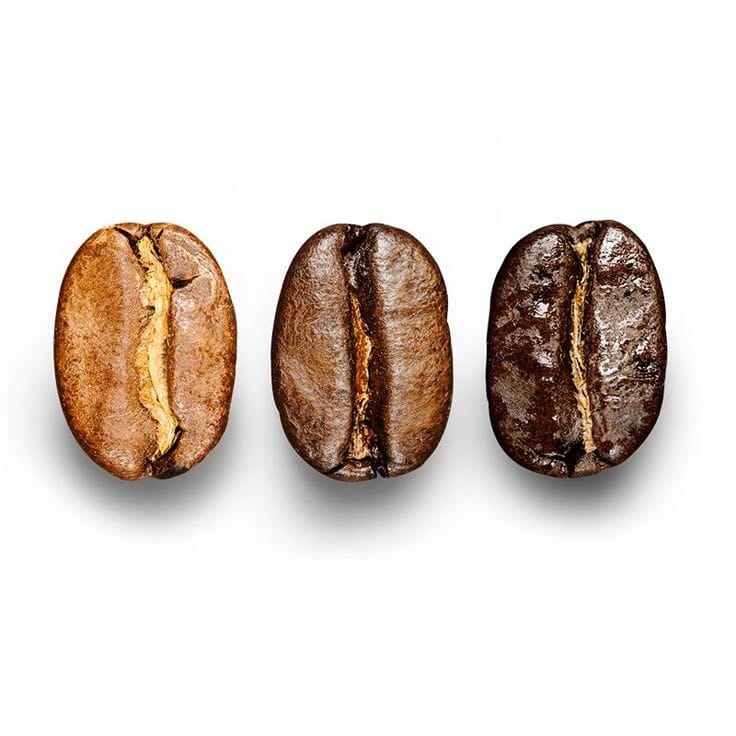
A supermarket roaster often roasts thousands of kilos at a time: fast, hot, and efficient. The goal is consistency and a long shelf life. Dark roasting is often used. A dark roast can mask potential flaws in the beans (such as those from bulk production) with a dominant, bitter taste. That is not necessarily bad, but it is a different philosophy.
A specialty roaster works in small batches. They constantly test, taste, and analyze to find the perfect roasting profile for a specific bean. Because the bean is already complex and flavorful on its own, it is roasted lighter. The goal is not to add flavors, but to bring out the unique flavors of the bean: notes of cocoa, red fruit, flowers, or nuts. It is like cooking with premium ingredients: you want to let the pure flavor of the product speak for itself, not hide it under a layer of sauce.
Do you really taste the difference?
Yes, chances are you will taste the difference. Many people who make the switch describe specialty coffee as:
- Less bitter: The coffee is naturally sweeter and has no sharp, burnt edge.
- Softer and rounder: It feels more pleasant and fuller in your mouth.
- A more complex flavor: You discover more than just 'coffee flavor'.
- A pleasant aftertaste: No harsh, dry aftertaste that lingers.
But let's be honest: if you always drink your coffee with lots of milk and sugar, or if you mainly drink it for a quick caffeine shot, then the difference might be less noticeable. And that is perfectly okay. In that case, specialty coffee might not be your thing, and a fine supermarket coffee is a better choice.
Why is it more expensive?
Specialty coffee is more expensive because you pay for the quality you taste and the ethics you don't see. The premium is woven into the entire chain:
- Manual picking: This takes more time and manpower.
- Strict selection: Part of the harvest is rejected.
- Fair payment: Farmers receive a significantly higher price for their superior product, enabling them to invest in their farm and community.
- Craftsmanship: Micro-roasters devote more time and attention to each batch.
- Sustainability: There is more attention to the impact on nature.
You can look at it this way: “Cheap coffee exists only because someone else in the chain pays the price.” With specialty coffee, that price is distributed more fairly. The money doesn’t disappear into large marketing budgets, but goes back to the people who make the quality possible.

Is it something for you?
Ultimately, choosing specialty coffee is a choice for a better taste experience, made possible by a fairer and more transparent process. It is coffee where every step, from the plant to your cup, is carried out with attention and care.
In other words, you are not just buying a bag of beans, but investing in a craft. You are choosing a product where quality and ethics go hand in hand, and where the unique flavors of the bean take center stage rather than being masked.
The main benefit for you is that you enjoy a significantly tastier cup of coffee, without the bitterness and with a richness of flavors you may never have experienced before. At the same time, you contribute to a more sustainable coffee industry, in which farmers receive a fair price for their hard work.
Has this story made you curious? The only way to truly understand the difference is to taste it yourself. Instead of overwhelming yourself with choices, start with a coffee known for its smooth and accessible flavor. Try it black first, without sugar, and discover which flavors you recognize. It is the first step in a journey of discovery that could change your perspective on coffee forever.